
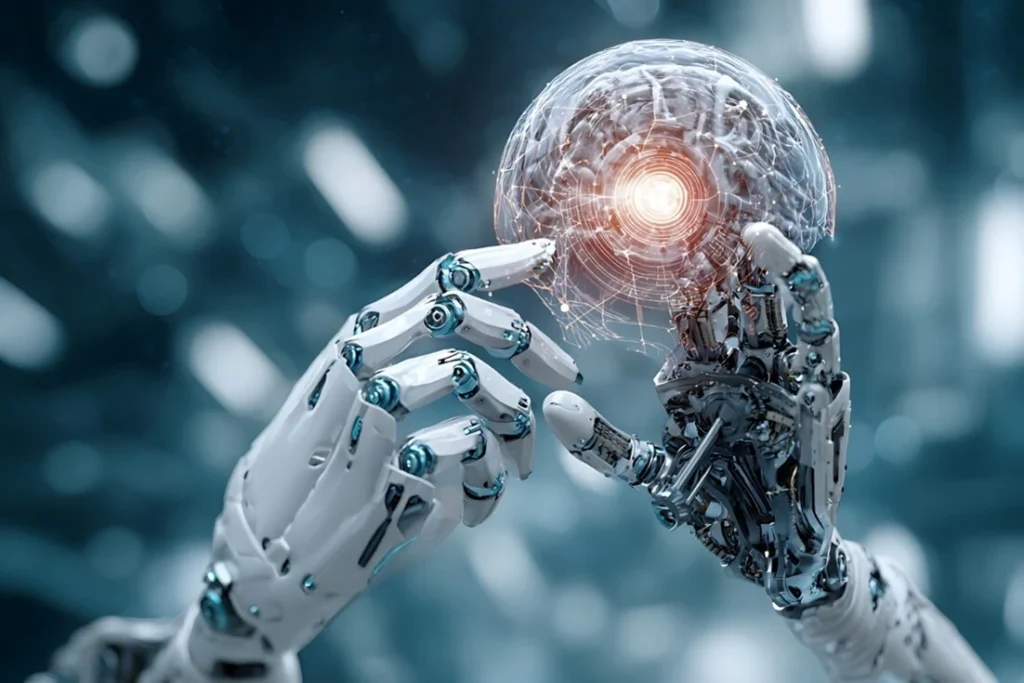
Artificial intelligence (AI) has moved from being a specialized research topic to becoming an important part of modern technology. From smartphones and search engines to software development and cybersecurity, AI is changing how digital products are built, used, and improved. Businesses are also adopting AI to automate repetitive work, understand data, and create more personalized customer experiences.
As AI tools become easier to access, technology is shifting from simple rule-based systems toward software that can recognize patterns, generate content, make predictions, and assist people with complex tasks. This transformation is affecting almost every major area of the technology industry.
AI Is Making Software More Intelligent
Traditional software usually follows instructions written by developers. AI-based systems can work differently because they can learn patterns from data and use those patterns to produce useful results.
For example, modern applications can recommend products, identify unusual activity, translate languages, summarize documents, or generate text and images. These capabilities allow developers to create software that can respond more dynamically to users.
AI is also becoming part of everyday digital experiences. Voice assistants, recommendation systems, smart search features, and automated customer support all rely on different forms of artificial intelligence.
For technology enthusiasts who want to follow these developments, TheTechyX.Com provides a useful place to explore technology-related topics and developments.
AI Is Transforming Software Development
One of the biggest changes is happening inside the software development industry.
AI coding assistants can help developers write functions, explain existing code, identify possible errors, and generate basic code structures. Instead of replacing every part of the development process, these tools can act as assistants that reduce repetitive work.
Developers can describe what they want to accomplish in natural language, and AI systems can suggest an approach or generate an initial implementation. Developers still need to review, test, and secure the resulting code, but the process can become faster.
AI can also help with software testing. Automated systems can analyze code and identify potential problems that might otherwise require significant manual effort. This can give development teams more time to concentrate on architecture, user experience, and complex technical decisions.
AI Is Changing Cybersecurity
Cybersecurity is another field where artificial intelligence is having a major impact.
Modern organizations generate enormous amounts of security data from networks, applications, devices, and user activity. Examining all of this information manually can be difficult. AI can help identify unusual patterns and prioritize events that may require investigation.
For example, an AI-powered security system might notice an unusual login location, unexpected network activity, or a sudden change in a user’s behavior. Security professionals can then investigate these signals more efficiently.
However, AI creates challenges for cybersecurity as well. Attackers can potentially use AI to automate certain malicious activities, create convincing social engineering messages, or discover weaknesses more efficiently. This means organizations need to consider both the defensive opportunities and new risks created by AI.
AI Is Improving Data Analysis
Businesses have access to more data than ever before, but having data is not the same as understanding it.
AI can process large datasets and identify relationships or patterns that may be difficult to detect manually. Companies can use these capabilities to study customer behavior, predict demand, detect unusual transactions, and support business planning.
Machine learning models can also improve predictions when they are trained using relevant and reliable historical data. For example, a company could analyze previous sales information to estimate future demand and adjust its inventory accordingly.
This makes AI particularly valuable for organizations where large amounts of information need to be processed quickly.
AI Is Changing Search and Information Discovery
Search technology is also evolving.
Traditional search engines primarily return lists of webpages based on a user’s query. AI-powered search systems can provide more conversational responses, summarize information, understand context, and help users refine their questions.
This change is influencing how people interact with information online. Instead of searching with several short queries, users can increasingly describe what they need in natural language.
For businesses and website owners, this also means that creating useful, accurate, and well-structured content is becoming increasingly important. Websites need to provide genuine information rather than relying only on repeated keywords.
AI Is Creating New Opportunities in Healthcare Technology
Healthcare technology is another area where AI has significant potential.
AI systems can assist with analyzing medical images, organizing information, identifying patterns in research data, and supporting administrative tasks. Researchers are also using machine learning to investigate biological data and accelerate certain stages of scientific research.
The important point is that AI should generally be viewed as a tool that supports qualified professionals rather than an automatic replacement for human expertise. Healthcare applications require particularly careful testing, validation, privacy protection, and oversight.
The broader development of trustworthy AI also depends on managing issues such as reliability, transparency, security, and privacy. The National Institute of Standards and Technology (NIST) AI Risk Management Framework provides guidance for organizations working to manage AI-related risks.
AI Is Making Devices More Connected
Artificial intelligence is also changing physical technology.
Smartphones, vehicles, cameras, home appliances, and wearable devices increasingly include AI-powered features. These systems can recognize speech, process images, understand user behavior, or make automated recommendations.
Smart cameras, for example, can distinguish between different types of movement. Smartphones can improve photographs automatically by analyzing lighting and objects in an image. Vehicles can use computer vision and other technologies to support driving-related functions.
As computing becomes more powerful and AI models become more efficient, more intelligence can also be placed directly on devices. This can reduce dependence on constant cloud processing and may improve response times and privacy in certain applications.
AI Is Changing the Way People Work
AI is not only changing technology products; it is changing workflows.
Employees can use AI tools to summarize information, organize ideas, draft documents, analyze datasets, generate presentations, and automate repetitive processes. This can allow people to spend more time on tasks requiring judgment, creativity, communication, and problem-solving.
At the same time, organizations need to establish sensible policies around AI use. Employees should understand what information can be entered into AI systems, how generated content should be reviewed, and when human approval is required.
The most effective approach is often a combination of human expertise and AI assistance. AI can process information quickly, while people provide context, judgment, accountability, and creativity.
The Challenges of AI Adoption
Despite its advantages, artificial intelligence is not without limitations.
AI systems can produce inaccurate information, reflect problems in their training data, or behave unpredictably in certain situations. Businesses also need to consider privacy, intellectual property, security, transparency, and compliance.
Another challenge is the quality of data. An AI system trained on incomplete or unreliable information may produce unreliable results. Simply adding AI to an existing process does not automatically make that process better.
Organizations therefore need clear objectives and appropriate testing before deploying AI at scale. Employees should also know when AI-generated results require human verification.
What the Future of AI May Look Like
Artificial intelligence is likely to become increasingly integrated into the technology people already use.
Rather than existing only as separate AI applications, intelligent features may become standard components of operating systems, business software, search platforms, development tools, vehicles, and connected devices.
The next stage of AI development will also focus on making systems more useful, reliable, efficient, and easier to integrate. Improvements in computing hardware and AI models could allow more sophisticated capabilities to operate across both cloud platforms and personal devices.
For technology users and businesses, the key will be understanding where AI can genuinely solve problems rather than adopting it simply because it is a popular technology trend.
Conclusion
Artificial intelligence is changing technology by making software more capable, automating repetitive processes, improving data analysis, supporting cybersecurity, transforming search, and creating new possibilities for connected devices.
Its impact will continue to expand as businesses and developers discover practical ways to use AI. However, successful adoption requires more than powerful models. Reliable data, human oversight, security, privacy, and responsible implementation will remain important.
AI is therefore best understood not simply as another software feature, but as a technology that is influencing how digital systems are designed, how people interact with computers, and how organizations approach problems.
